
Accountability: When Ministers Actually Resigned | #306
+ Irrfan or Kevin Spacey. Who did it better?

Question time 💭
Lord Aberdeen oversaw the Crimean War which saw the death of British Troops. What did he do post the war?
The Constitutional Conduct Group - a collective of former IAS and IPS officers - who one would assume know a thing or two about doing their jobs effectively, have written an open letter demanding the resignation of Union Education Minister Dharmendra Pradhan. If you happen to live under a rock or have disassociated yourself from the news, Dharmendra Pradhan, whose ministry conducts the NEET exam, has neatly decided not to step down after the 2026 paper was leaked. Then a few cockroaches (please ask Justice Suryakant for the name) exposed irregularities in the CBSE conduct and correction of the Board Exam papers.
Despite the hullabaloo of resignation, Dharmendra Pradhan has stayed put. It made us wonder - has any Indian minister taken accountability for failures in their ministries?
This week we take a look at instances when the buck stopped with the minister and not with scapegoats.
Things we learnt this week 🤓
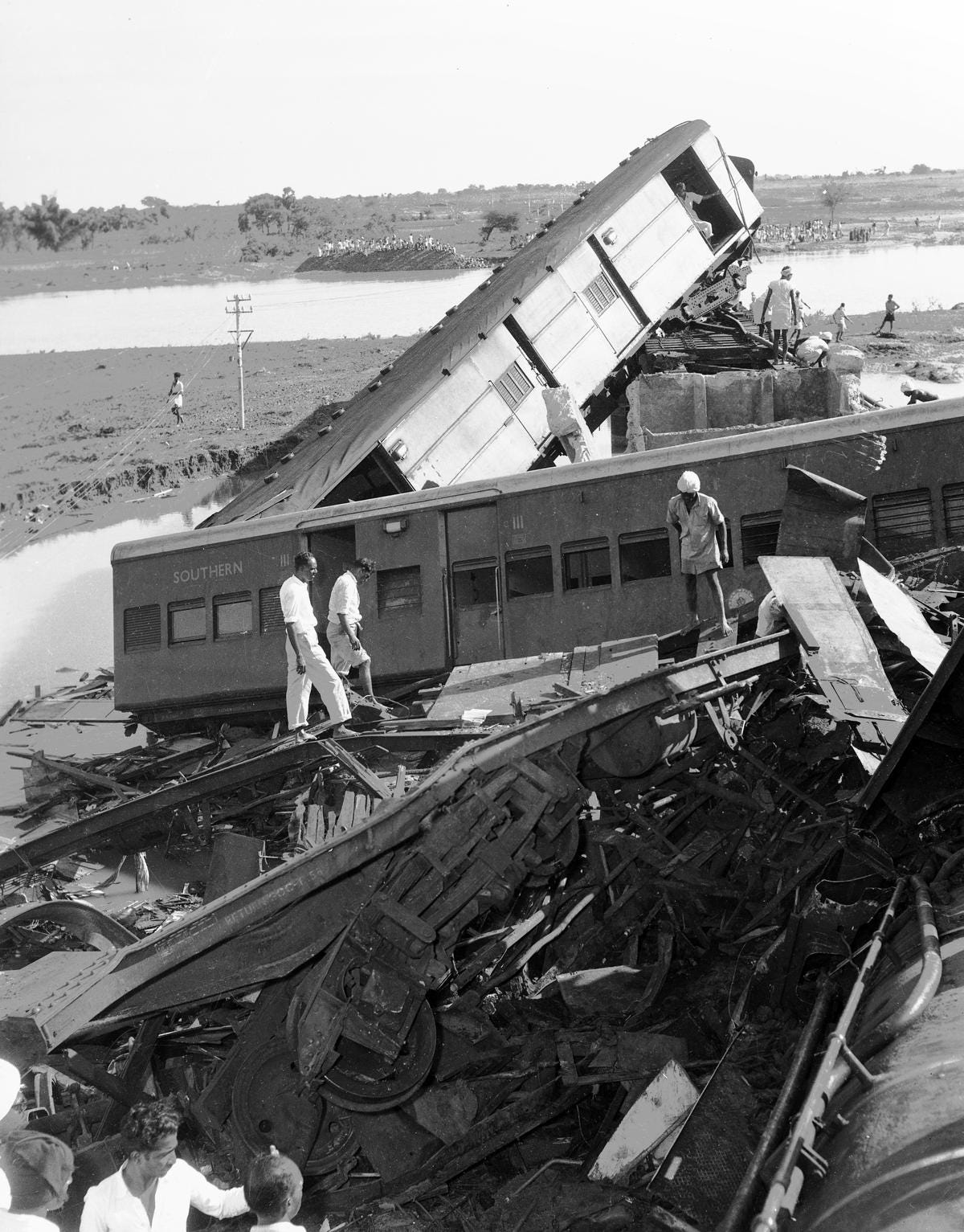
Lal Bahadur Shastri was the true Adarsh Balak. When he was getting married, he refused to take dowry as was the norm then. When he became Prime Minister, he actually applied for a loan to buy a car. He refused to celebrate his own birthday, because it was the birthday of the father of the nation… So it shouldn’t be a surprise that the man chose to be accountable for a train accident in 1956 that took the lives of 112 people. The then Railway minister tendered his resignation, which was not accepted by Jawahar Lal Nehru. Then when a few months later, another railway bridge collapsed in Ariyalur, Tamil Nadu, taking the lives of 144 people, Shastri insisted that he be held accountable and resign. This high bar of accountability set by Shastri, has never really been matched. In Indian politics, accountability is often said to be a train that never arrives. Lal Bahadur Shastri remains one of the few leaders who actually got on board.
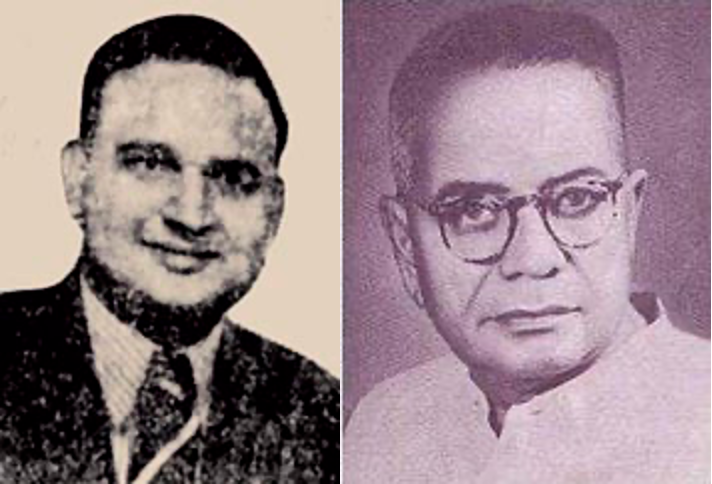
These days financial scams are a dime a dozen. But back in the 50s Haridas Mundhra, who started his career as a light-bulb salesman, had a light-bulb moment and started essentially a Ponzi scheme. He would manipulate the stock market to acquire control of British companies vulnerable to takeovers, then use the cash reserves of those companies to buy the next one, bankrupting them one after the other. He would manipulate the stock market to acquire control of British companies vulnerable to takeovers, then use the cash reserves of those companies to buy the next one, bankrupting them one after the other and he stood over this pyramid worth 4 crore. But a pyramid scheme always unravels. He found a life saviour - LIC. Life Insurance Corporation of India - which had just started its own life - after having over 245 private insurance firms merged and nationalized, invested 1.2 crores into Mundhra’s empire to prop up his failing companies. Turns out that LIC had to invest based on Government pressure without the approval of its own board. Public money being used to prop up private businesses. Thank God such things don’t happen anymore. The person who blew the lid on the scam was one Feroze Gandhi, who happened to be the prime minister’s son in law. Standing in Parliament in December 1957, he asked whether public funds had been used to bail out a stock speculator. The Finance Minister, T.T. Krishnamachari, initially snapped “That is not the fact” - and then had to admit it was. TTK initially tried to blame his finance secretary, but ultimately resigned after being pointed out that a minister is constitutionally responsible for the actions taken by his secretary and cannot disown them. Paging Hansal Mehta to make a series on another fraudster with initials HM - Scam 1957 with Haridas Mundhra.
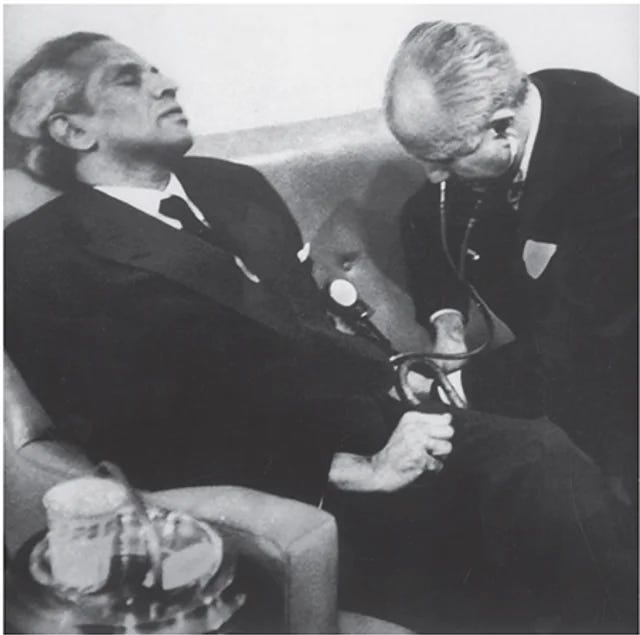
VK Krishna Menon, once gave a 23 hour speech in the United Nations, after which India was able to consolidate its position on the Kashmir issue. He also was successful in his role as defense minister in the annexation of Goa from the Portuguese. He also played an important role in the Korean ceasefire. You could say he had a pulse on all matters related to the world. But cracks were appearing. It is said that he undermined intelligence from as early as 1955 that China would go all out to secure disputed border territory. In July 1962, with tensions rising on the Ladakh border, Menon left for Geneva to attend an international conference. Atal Bihari Vajpayee - then a Rajya Sabha member - wrote to Nehru saying the Defence Minister’s frequent absence during a border crisis was “very unjustifiable.” Nehru defended his man. In October of 1962, China attacked India and an unprepared India defense fell prey to the Chinese aggression. The army was woefully underprepared for high-altitude warfare - short on winter clothing, ammunition, and modern weapons. Despite the loss, Nehru initially tried to protect Menon, but by end of October Menon resigned. Scholarship of that time shows that Menon was not solely to be blamed - the defeat owed as much to Nehru’s own provocations and Congress party intransigence on the border question as to Menon’s failures. But in a crisis, someone has to go. Menon understood that.
From IWTK, with love 💌
Where have we seen the start of the Alpha trailer before?
Irrfan or Kevin Spacey. Who did it better?
Only In India 🇮🇳
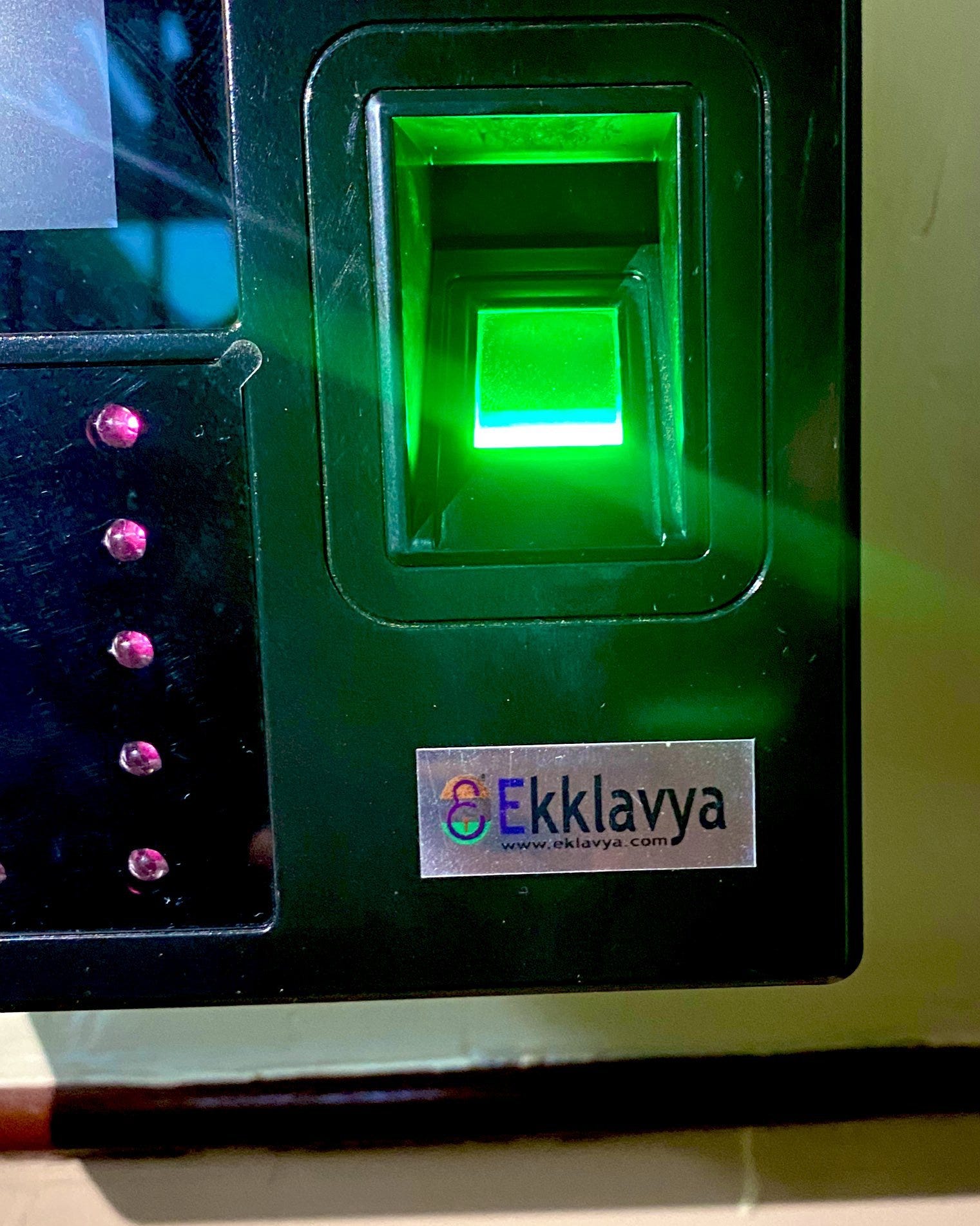
A fingerprint reader named after a man who famously gave up his finger.
Answer time ✅
He resigned. He is considered one of the earliest Prime Ministers who resigned.
💟 IWTK